Ipinapakita ang mga post na may etiketa na SD40. Ipakita ang lahat ng mga post

Miyerkules, Pebrero 17, 2016

Scale trains sd40-2


Sd40 sd40-2 sd40t-2 locomotives ho scale - model trains, Intermountain ho 49364-02 emd sd40-2, union pacific #3527 (1980s/90s scheme, armour yellow, gray, red) (equipped with esu lokpilot select non-sound decoder). Sd40-2 – scaletrains.com, Scaletrains.com is an innovative manufacturer of ho and n scale trains. sign-up for our newsletter to be the first to know about our new models.. Bachmann sd40-2 bachmann model trains trainworld, Bachmann sd40-2 bachmann model trains trainworld. shipping; policies; contact; scale: ho. $77.99. add to cart. bachmann #60910 emd sd40-2 w/dcc - csx (dark.
Z scale sd40-2 - zscale monster trains, Z scale monster trains specializes in micro-trains z scale items. we have photos of all z scale products sold, that is rare on competitors websites..
Sd40-2 : bachmann trains online store, Bachmann trains online store : sd40-2 - catalogs large scale ho scale all scales n scale o scale on30 scale williams 3 rail o scale product lines warehouse finds.

Scale trains sd40-2

HO-Scale-Intermountain-Kansas-City-Southern-EMD-SD40-2-locomotive
Bowser 24135 HO GMD SD40-2 British Columbia BC Rail #766 ESU LokSound
HO SE KIT SD40-2, Indiana Railroad (ATH2232): Athearn Trains
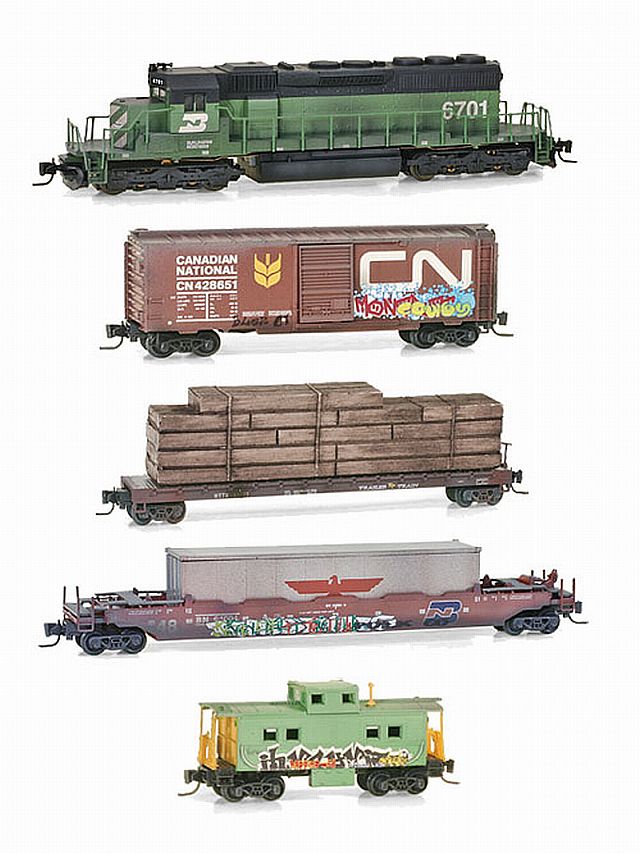
 SD40-2 Three Cars and a Burlington Northern Caboose . Now Available
SD40-2 Three Cars and a Burlington Northern Caboose . Now Available
Broadway Limited HO Scale SD40-2 Locomotive CON #6391 DC DCC Paragon3
 98251 SD40-2 W/NOSE LIGHT, BNSF/HERITAGE I # 6875 HO Scale MIB eBay
98251 SD40-2 W/NOSE LIGHT, BNSF/HERITAGE I # 6875 HO Scale MIB eBay

Miyerkules, Nobyembre 18, 2015

Throwback Friday 13 L N SD40 2 3562 and SCL C420 1223 at Corbin KY in October 1976


L&N SD40-2 #3562 and SCL C420 #1223 share a quiet moment at Corbin, KY in October 1976. Uncredited slide from author's collection,

Circumstances conspired against me last night when I started to write this, but nonetheless, here’s a slightly delayed Throwback Thursday. It’s October 1976 and we are deep in Louisville & Nashville Territory at Corbin, Kentucky. Very much a railroad town, Corbin lies a few miles north of the Kentucky-Tennessee border and is home to a large yard facility, closely tied to the areas’ coal mining industry. Home to many local mine runs, and later an important inspection point for unit coal trains, the yards and facilities form the main terminal for the L&N/SBD/CSX’s Cumberland Valley Division.

A railroad that wasn’t afraid of mixing it up when it came to motive power, the L&N purchased products from EMD, GE, and Alco, often on the secondhand market. One of many roads that bought EMD’s popular SD40-2, L&N ordered 30 units from EMD on order #74644, with delivery beginning in October 1974. Evidently considering them a fine example of four-axle motive power, L&N acquired a large fleet (if not the largest) of Alco C420’s, amassing units both new and cast off from other railroads. SCL C420 #1223 is an example of the latter. Built in June 1965, the engine was one of 35 C420’s that the SCL rostered, originally wearing road number 121. Retired in April 1982, the engine would go on to become part of the L&N fleet, becoming L&N 1362, continuing the railroad’s penchant for acquiring Alcos second-hand. An interesting visitor at the time of this photo, the unit would likely pass through Corbin many more times while working for its’ second owner.

L&N SD40-2 #3562 would go onto have a rather interesting history itself. Built in October 1974, the unit was approaching its’ second birthday at the time of this photo. A few years later, in 1982, the engine received minor damage to the nose after a washout wreck at Whiteside, TN. Interestingly, the unit emerged from the event with a solid grey short hood, an example of the L&N’s habit of experimenting with nose paint options (solid yellow, solid grey, sawtooth patterns, etc). In the ensuing mergers of the 1980’s, the unit became SBD 3562, to SBD 8190, and subsequently CSX 8190. A renumbering to CSX 2424 and a reconfiguration to a slug “mother” meant a relocation to Rice Yard in Waycross, GA, where recent photos reveal the unit in the current “dark future” paint scheme.

‘Til next time,
Cheers,

Peter.

Sabado, Mayo 2, 2015

Throwback Thursday 6 CN SD40 5070 at GMDD London November 1968


CN 5070 sits in the company of an unknown CP SD40 in front of the General Motors Diesel Division plant in London, ON on November 1, 1968. Reg Button photo, author's collection.


Today’s Throwback Thursday takes us back to November 1, 1968. We’re at General Motors Diesel Division (GMDD) in London, Ontario where we find brand new Canadian National SD40 #5070 ready for release. In the background we observe another SD40, although it will go to work for rival Canadian Pacific. How to tell? Close examination reveals a number of differences between CN & CP SD40’s; CP SD40’s featured cab-side rain gutters (not sun shades), snowplow instead of rock plow, a different MU plug arrangement, tight-lock couplers instead of conventional coupler, different air tanks (one large instead of CN’s two smaller tanks on each side) and (especially to modelers), different stairwell (step) arrangements. Another painted CN SD40 off in the distance. Perhaps this is an open house to show off the latest-and-greatest in Canadian motive power? Maybe, but the reason for this interesting pairing of engines may well be lost to history…

About the London plant: General Motors opened the plant at London in late 1950, at a time long before Free Trade permitted easy import of goods to Canada from the US (without costly import tariffs). Facing competition from Montreal Locomotive Works and, to some extent, Fairbanks-Morse (under license to Canadian Locomotive Company), GM constructed the branch plant to supply Canadian roads with new diesels. Toronto, Hamilton & Buffalo GP-7 #71, famously destroyed in a wreck in February 1980 east of Smithville, ON, was the first locomotive completed at the new plant, and was soon to be followed by many more engines for CN, CP, and other Canadian railways. With its’ busiest year in 1958, the overwhelming majority of diesels built for Canadian roads over the next 35 years or so were built in London. When EMD stopped production at its’ primary manufacturing facility in La Grange, IL in 1989, all GM locomotive production was consolidated to the London plant. The plant then handled all production for not only North American railroads, but also did brisk business manufacturing locomotives for export to countries all over the globe. A declining market share, however, eventually lead to the sale of GM-EMD to Greenbriar Equity Group in April 2009, which included the London plant. Run for a number of years under Greenbriar ownership, the former GM-EMD assets were sold in 2010 to Caterpillar Inc. As part of their Progress Rail division, the London plant operated until 2012 when it was shuttered in favour of manufacturing capacity at their new Muncie, IN locomotive plant. The last diesels to be constructed in London were an order of Kansas City Southern SD70Ace’s, with KCS 4130, 4131, 4133, 4135 and 4136 leaving the plant on September 25, 2012, bringing an end to 62 years of locomotive manufacturing in London.

Not only did the plant produce diesel (and even electric) locomotives, but also buses, earth-moving equipment, and military vehicles for GM’s other manufacturing divisions. Though production of busses and earth-moving equipment has long since ended, part of the plant survives under General Dyamics Land Systems ownership and still produces military vehicles.

What about CN 5070? Following its’ release from GMDD London, the engine enjoyed a long career with CN, eventually being repainted into the popular “zebra stripe” scheme. The engine changed little mechanically over the years, eventually gaining a new snowplow and snow shields, along with new horn, ditch lights, winterization hatch and rear rock plow. Though CN initiated a program to rebuild their SD40 fleet in the mid-1990's, it was soon realized that the per-unit rebuild cost was relatively high compared to the cost of purchasing a new unit. Declared surplus, the engine was leased in 1998 to Quebec Railway Corporation for use on the New Brunswick East Coast railway. Less than a year later, the engine was retired in 1999 after 31 years of service. A new lease on life was granted after rebuild by GEC-Alstom in spring 1999 and the engine was released as Chemin de Fer Matapidia et du Golfe (CFMG) #6909 in a solid black paint job. After nine years of operation in southern Quebec, a sale of the QRC operations (CFMG, NBEC and Ottawa Central) to CN in 2008 spelled the end of the line for the engine. Ironically purchased back by its’ original owner, the engine was shipped to the Homewood, IL shop to await disposition. Resold to Allied Services (A division of Allied Equity Group), the engine traveled to Georgianna, AL as ASDX 6909, where it ultimately met the torch.

One has to wonder if CN 5070 and the unknown CP SD40 ever crossed paths again – likely not, but who knows?…

‘Til next time,
Cheers,

Peter.

Lunes, Nobyembre 17, 2014

HO Review Bowser GMDD SD40 2 CP 6046


The latest addition to my roster, CP SD40-2 #6046, is almost ready for service on the layout. A bit of weathering will complete an exquisite HO model. 


At the Ancaster train show this past weekend, I had the opportunity to pick up one of the new Bowser General Motors Diesel Division (GMD) SD40-2’s, part of their recent release of units matching prototypes purchased by CP, ONT, and BC Rail. I must admit, this was one of my most-anticipated purchases, and I’m glad the wait is finally over! This is not intended to be a 100% complete review, as I may miss a few things, but it should capture most of the locomotive’s highlights.

The Prototype

In 1:1 scale, CP 6046 is a GMD-built SD40-2, rolled out of the London, ON plant in March 1983. Part of CP’s second-to-last order for conventional SD40-2’s (the SD40-2F “Red Barns” followed in 1988), the unit was delivered in the road’s Action Red paint scheme with a small multi-mark adorning the rear of the long hood. Customary of late CP SD40-2’s, CP 6046 is equipped with features including the late-style corrugated radiators, Q-fans (at radiator), external radiator piping, anti-climber on front pilot, and angular traction motor blower duct. Over the years, the unit has undergone minor changes to it’s appearance, most notably a repaint to the solid red Action red paint scheme, as well as the addition of ditch lights on the front pilot. More information can be found HERE.


CP 6049, three numbers away from the my Bowser model, is from the same 1983 build as #6046 and is in the same paint scheme. Remarkably intact after 28 years of service, some updates to its' appearance include frame reflective stripes on the side sill, replacement handbrake wheel and battery box door, new snowplow, removal of the class lights, and weathering which includes some fading, darkening of radiator/dynamic brake/air filter screens and burnt "CP Rail" on the side of the hood. London, ON on 11/06/2011.

 The Model

When Bowser first announced the release of an HO GMD SD40-2 specific for CP, I immediately set aside some of my hobby budget specifically for this unit. I had modelled two CP SD40-2’s in the past (and one of them is almost done by now…) and one thing I realized in researching the required detail parts was the myriad of possible detail configurations on CP’s SD40-2’s. Differences exist in nose length, radiator type, fan type, winterization hatch, snowplow, horn location, radio antennas, front pilot (anti-climber or not), traction motor blower duct, and last but not least, paint scheme. So when I opened the box and took the model out, to say that I was impressed is putting it mildly – from an initial inspection, I was blown away by the level of detail that Bowser put into the locomotive. The first thing I noticed was that the engine was screwed into a plastic base as part of the clam-shell style of restraint in the box; I like this method and think it offers better protection than simply clamping against the top and bottom of the locomotive. A small piece of brake line did separate from the model (I have yet to determine exactly where it belongs), but that’s perhaps not unexpected when the engine has already travelled half way around the world from the factory. I could say that “the model closely matches prototype dimensions”, but since it is already obvious that it does. Instead, I’ll go over some of the more impressive details that Bowser put into the locomotive.

A close-up shot of the cab shows details such as class lights, air hose glad hand detail, builder's plate, and handrail detail.

  • The Dofasco name on the truck sideframes – some might consider this an insignificant detail since it’s usually buried under years of road grime, but I thought this was a really neat feature, one of the things that makes it distinctly Canadian.
  •  The Canadian-style handrails – Many times it is forgotten that the handrails on GMD SD40-2’s is somewhat different than those built at La Grange. Since CP SD40-2’s feature unique upright stairs (to prevent snow accumulation in winter), the handrails follow suit by following a more vertical profile at each corner than US-built SD40-2’s. Likewise, a unique CP add-on are the chain attachment triangular hoops on either end of the engine. This could have easily been overlooked, but again are a signature detail on this model.
  • The Class Lights – not only does the model look nice, but it is detailed inside and out. A great deal of effort went into the electronics on the locomotive (especially sound units equipped with LokSound decoders), one of the most interesting details being the individual white, red, and green LED class lights. I’m glad I didn’t have to solder any of those wires! 
  • The other lights – a number of minute LED’s provide impressively bright lighting on the engine. One thing I was impressed by was that the LED’s for the ditch lights are mounted in the shell, right on the pilot, not lit by “light tubes” or “fiber optics” as some other manufacturers have done. This means that the ditch lights are just as bright as the headlights, not much dimmer as on other models equipped with lit ditch lights.
  • The Graphics – not only is the model detailed correctly, but clearly a lot of effort went into the paint and pad-printing on the model. The lettering, even some of the smaller details such as the “lift here” at the jack pads is clearly readable – the resolution of some of the graphics, such as the builder’s plate, is probably beyond the capability of my eyes to read! Likewise, separately-coloured handrails, handrail stanchions, grab irons, cab interior, and exhaust stack all contribute to the superb appearance of the model.
  • The Motor – I’m told this model uses a new motor for Bowser products, which likely explains the size of the flywheels on the motor shaft. I didn’t measure them, but they appear to be a good bit larger than the old Athearn Blue Box flywheels, which seem to help the model operate quite smoothly. The motor is surrounded by a great deal of weight, which should give the engine plenty of traction.
  • The Wheels – one thing I thought was a nice touch was that blackened-metal wheels were installed on the model. No shiny silver wheels that need painting on this engine! To me, this is one of the details that set this model apart from other high-end manufacturers, or even brass engines. Additionally, Bowser included extra bearing caps in the packaging - CP has a habit of exchanging the enclosed Hyatt-style bearing covers for exposed-cap bearings, similar to freight car bearings where one can observe the rotation of the end cap. Bowser included a set of spare bearing caps so that the unit can be detailed per prototype, if it has received replacement bearing caps. 

 
This shot of the engineer's side of the engine showcases details such as the Q-fans, external radiator piping, rear pilot detail and waste retention tank, another nice touch.
Two minor things (really minor) caught my attention as minor areas for potential improvement. The first, a detail difference, is that the CP SD40-2’s feature an angled drip rail above the cab side windows. The model appears to have a straight drip rail, which is at most a minor correction. The second is not so much a detail issues as an operational one – the front pilot interferes with the coupler trip pin on the car coupled to it (assuming trip pins have not been removed from one’s rolling stock). This is not an issue unique to this model, but almost any engine that has a snowplow; I first noticed this phenomenon on an Athearn Genesis GP38-2W. My solution on that engine, likely on this one as well, will be to install a long-shank coupler on the front of the engine to avoid contact between the trip pin and the round style rock plow on the front pilot.

Again, this is not meant to be a complete review or any sort of advertisement for Bowser, but it is hard to overlook the massive amount of detail that went into creating one of the most detailed (and one of my most favourite) HO plastic engines anyone has ever produced.

‘Til next time,
Cheers,

Peter.